Poppy and Alex’s two-year estrangement
People We Meet on VacationPoppy and Alex’s two-year estrangement is the long silence after Croatia, a separation neither character can treat as a clean break when they meet again. Poppy eventually initiates contact, but the reunion does not restore their old ease: grief, missed knowledge, and the admission that both of them withdrew remain present in even their simplest exchanges. The estrangement matters not only because they lose two years together, but because their return to contact makes the loss newly visible.
The Silence and the First Message
The evidence leaves the precipitating events in Croatia largely unelaborated, but makes clear that the rupture led to two years without their former closeness. When Poppy considers contacting Alex, she finds his number still at the top of her favorites. Optimism had kept it there; after so much time, deleting it feels like a final act she cannot bear. The saved contact makes the silence tangible: she has not erased the possibility of him, even while their friendship has gone unattended.
Poppy first types that she has been thinking about him, then deletes it. She tries a more casual invitation to get out of town, but recognizes the strain in pretending that nothing happened and that they can still arrange a trip as easily as before. The hesitation is not simply about finding the right wording. She is trying to approach a friend while avoiding the acknowledgment that their intimacy has changed. In the end, she sends only “Hey.”
When Alex answers with the same one-word greeting, Poppy is startled enough to nearly reply as though he had contacted her first. She knows that he did not; she is the one who initiated the exchange. The symmetrical greeting offers no easy opening for conversation, and her immediate uncertainty over what to say shows how unlike their old fluency the renewed contact feels. A minimal message brings them back into communication without resolving what made communication stop.
Meeting Again and Discovering What Was Lost
When Poppy and Alex speak face to face, Alex explains that he had not been sure she wanted to hear from him. Poppy tells him that she did. She wants to ask whether he had also considered calling or sending messages, whether he felt that two good years had been lost, and why he let the separation continue. Those questions remain unasked. Their server arrives with the check, and Poppy instinctively reaches for it before Alex can; she then lies that they will be reimbursed. The small deception accompanies a larger inability to say plainly what the reunion means to her.
The conversation has already touched the death of Betty, which Poppy learns about at the meal. She apologizes and says she wishes Alex had told her about Betty and Flannery O’Connor. Alex looks up at her and explains that he was unsure she wanted to hear from him. Poppy says she did, and he answers that now he knows. Their exchange gives the silence a painful practical consequence: while they were apart, important losses occurred without Poppy being told, and Alex believed that telling her might not be welcome. The precise folding of straw wrappers into small squares contrasts with the emotion he does not openly show; Poppy, meanwhile, struggles to keep her voice steady and blinks back tears.
Outside, the dark, starry parking lot and a breeze after the day’s heat do not lighten the strain between them. Poppy recognizes that they have brushed against what happened in Croatia. She had thought they could leave it in the past, but now understands that each new thing she learns about the intervening two years presses on the same raw place. She suspects the discoveries affect Alex too, while acknowledging that he is good at bottling up feelings he does not want to share. During the ride home, she wants to tell him she would take the past back if doing so could fix their present. The wish is powerful but remains unspoken.
Withdrawal and Uneasy Closeness
Later conversations reveal Poppy’s own part in the estrangement more directly. She reflects that she fled Linfield, left the University of Chicago, and, in a sense, fled Alex when everything happened. She recognizes that he fled her too, but refuses to place all the blame on him: she was terrified, ran, and left him to fix what had happened. That account complicates any simple picture of one friend abandoning the other. The separation grows from two withdrawals, even though Poppy now sees that her decision to leave the repair to Alex was also consequential.
The distance continues to shape how they speak during their renewed time together. When Poppy addresses him by name as they discuss Sarah, Alex asks her not to chastise him, adding that dating feels grim and that he and Sarah have a lot of history. Poppy replies that they have a sordid history and have broken up twice. The exchange is more familiar and teasing than their first hesitant greeting, but it also shows how easily a question about Alex’s choices becomes charged. Their old conversational closeness is returning unevenly, alongside the uncertainty that the silence left behind.
Poppy also reacts strongly when Alex says his recurring back problem began a couple of months after Croatia. He describes hunching over while reading or using his computer, a massage therapist’s suggestion about his hip muscles, and a doctor who prescribed muscle relaxants before leaving without answering his questions. Poppy’s intense response to the timing underlines how much she now notices details of his life that once might have been shared as they happened. The account does not establish that the estrangement caused his back problems; it does show how separation makes even ordinary personal information arrive belatedly, carrying emotional weight.
What the Reunion Can and Cannot Restore
In the rain, after they tear away the remaining plastic sheeting and let the water fall over them, Poppy tells Alex that he was right: they cannot go back. Alex asks whether she would really want to. The exchange marks a shift from treating the past as something they might simply resume to facing the possibility that their relationship cannot return unchanged. Poppy does not yet complete her answer. The rain gives them a moment of shared laughter and openness, but does not supply a ready-made resolution.
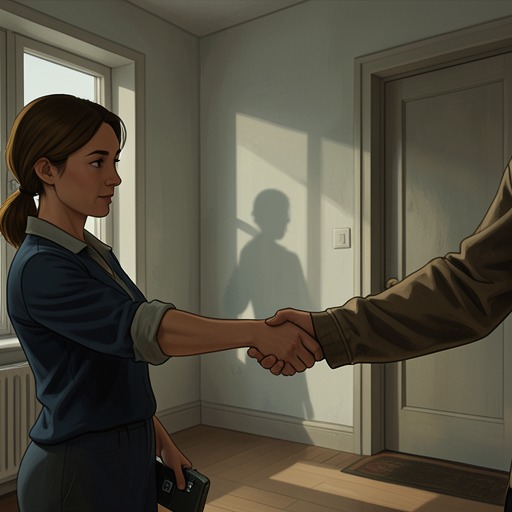
The estrangement’s effects remain visible in a later encounter, when Poppy sees Alex among other teachers. She has come despite wanting to bolt; when he looks up, she makes herself approach. They exchange “Hi,” and wait, but nothing else comes out. The greeting echoes the one-word text that reopened contact: both are small acts of approach, and neither immediately restores the words they once could say. The two years apart therefore remain part of their renewed connection—not an empty interval they can simply erase, but a history they must meet again, hesitations and all.